Mining Tailings Dredging

Mine tailings are the natural byproduct of raw materials mining. As rocks and minerals are crushed and washed, the effluent water carries the dust particles to settling ponds where the material is collected and eventually removed. It is then hauled away for a secondary process or stored for long periods of time. In many cases, these byproducts commonly referred to as “fines” or “tailings” have high value (ex. gold tailings or coal fines) and can be mined again with a hydraulic mine tailings dredging system and pumped to a dewatering or separation plant for reprocessing.

If you would like to speak with someone about Versi-Dredge equipment and your mining tailings dredging needs, call (866) 483-0014 or  click “Get Started” below to tell us about your project.

IMS Versi-Dredges Mining Tailings Around The World

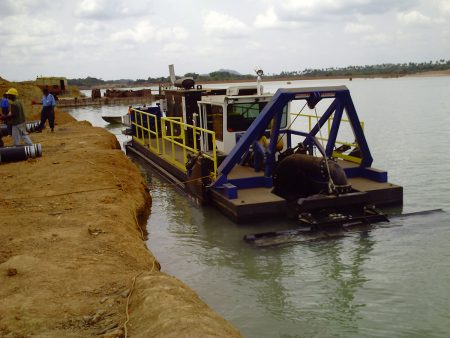
An IMS 7012 HP Versi-Dredge cleans out a gold tailings pond in South Africa.

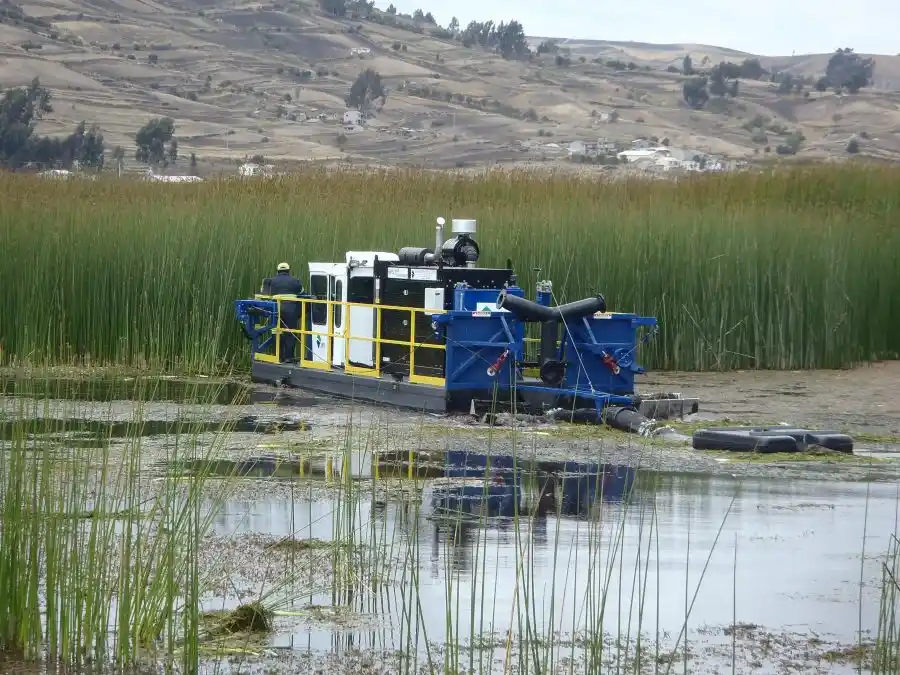
An IMS 5012 LP Versi-Dredge cleans out a lignite coal sump in East India.

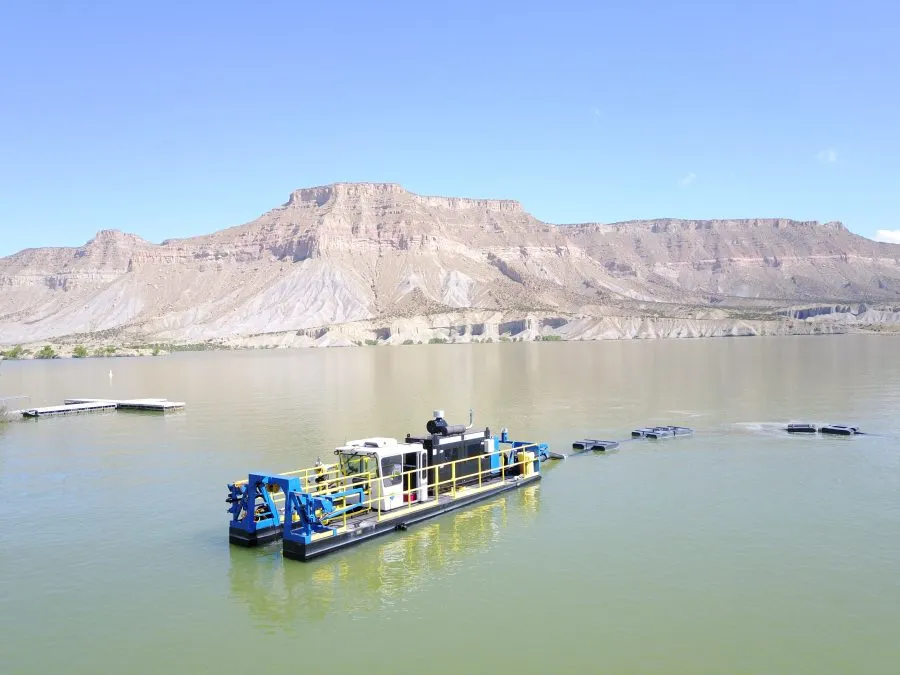
A contractor cleans out a copper tailings mine with an IMS 7012 HP Versi-Dredge in the US.

An IMS 7012 HP Versi-Dredge cleans out a larger tailings pond in Malaysia.

A contractor cleans out a mine slimes pond in Canada using the secondary cable drive system on their IMS 7012 HP Versi-Dredge which is a standard feature.

Two IMS 5012 LP Versi-Dredge units clean out a mine tailings pond in Canada.

A 5012 LP Versi-Dredge with Starwheel Drive self-propulsion makes precision cuts in a mine tailings pond. The Starwheel Drive self-propulsion system allows the dredge to operate in larger tailings ponds where travel cables are not practical.

A 7012 HP Versi-Dredge cleans out a mine tailings pond in Canada.

Versi-Dredge Capabilities

The Versi-Dredge can be used for clearing tailings ponds and direct feeding dewatering plants with the SolidsMaster cutterhead, which can produce a continuous solids feed of 20-25% – depending on the material. In addition, the WeedMaster cutterhead can be used in mine tailings dredging to remove cattails and other vegetation, which commonly build up on the edges of these ponds.

News

Frequently Asked Questions

How are mine tailings ponds dredged and reclaimed?

Mine tailings ponds are dredged with a hydraulic dredge that pumps the tailings slurry to a dewatering plant, containment cell or reprocessing circuit, reclaiming pond capacity and stabilising the impoundment. IMS dredges use abrasion-resistant, high-chrome pump components and the patented Pump Defender® debris guard to handle aggressive tailings continuously. IMS Versi-Dredges are working in gold, copper, coal-ash and slimes ponds from South Africa and Malaysia to Canada and the US. The system is engineered to your pond and plant layout.

Can tailings be re-mined for residual minerals like gold, coal fines or rutile?

Yes. Many tailings retain valuable residual minerals — such as gold, coal fines or rutile — and a hydraulic dredge can re-mine the pond and pump the slurry to a wet plant for reprocessing, recovering value from material that would otherwise be waste. IMS Versi-Dredges have been used worldwide for exactly this, including gold tailings in South Africa and a 7012 HP supplied to Sierra Rutile for titanium-bearing sands. The setup is matched to your material and plant feed rate.

What dredge handles abrasive, high-solids tailings slurry?

High-solids, abrasive tailings call for a heavy-duty hydraulic dredge with an abrasion-resistant slurry pump and debris protection. IMS dredges use high-chrome pump components and the self-cleaning Pump Defender® to maintain production and limit wear in tailings duty. The 7012 HP is a common choice for continuous, high-volume tailings work — it is the model used on gold tailings in South Africa, copper tailings in the US and large tailings ponds in Malaysia and Canada.

How do you control pump and cutterhead wear when dredging abrasive tailings?

Wear is controlled by using abrasion-resistant high-chrome pump components, matching pump speed and solids concentration to the material, and protecting the inlet with the self-cleaning Pump Defender® debris guard to reduce clogging-related stress. Proper pipeline sizing and routine maintenance further extend component life. IMS configures the dredge for long service in abrasive tailings.

How far can tailings be pumped to a dewatering or reprocessing plant?

Tailings can be pumped a long way to a dewatering or reprocessing plant, with distance extended by staging IMS booster pumps in the pipeline; the achievable run depends on solids, elevation and pipe diameter. IMS engineers calculate the pumping distance and booster staging for your plant location. Provide your route for a precise design.

What are the key considerations for continuous tailings pond dredging?

Continuous tailings dredging requires planning for 24/7 uptime: abrasion-resistant and easily serviced components, the Pump Defender® to minimise clog downtime, a reliable pipeline and booster layout to the plant, and a dewatering or return-water strategy. Patented Starwheel Drive® self-propulsion also lets the dredge work large ponds where travel cables are not practical, while a secondary cable-drive system is included as standard for lined or confined ponds. IMS will help engineer a continuous-operation setup for your pond.

February 22-25, 2026

Salt Lake City, Utah

March 3-7, 2026

Las Vegas, Nevada

Use Code: ELL5455C